
Acrylic wall name plates suit some factory areas but become a poor purchase when heat, impact, solvents or outdoor exposure exceed the material’s limits. By comparing acrylic with metal and other sign substrates, then specifying the right finish, mounting system and artwork, you can decide where acrylic earns its cost and where a tougher material is the better investment.
Key takeaways
- Choose acrylic for polished, lightweight plates away from heat and abrasion.
- Use metal where impact, chemicals or high temperatures threaten the plate.
- Specify thickness, lettering contrast, mounting method and cleaning requirements.
- Standardise sizes and artwork files before ordering plates across the plant.
Does acrylic offer enough value over metal and other sign materials?
Acrylic offers enough value when a large plate must look polished without becoming heavy. PMMA weighs about 1.18 g/cm³, far below glass, so a glass-like face is easier to handle and places less load on the wall. Metal still wins where abrasion, heat and industrial abuse define the service life.
| Material | Weight and appearance | Resistance and upkeep | Customisation and replacement |
|---|---|---|---|
| Acrylic | Light; clear, solid, frosted or glossy premium finish | Corrosion-proof, moderate impact and heat resistance; fingerprints and fine scratches need gentle cleaning | Fast digital changes; easy short or medium-run replacement |
| Painted steel | Heavy; conventional industrial appearance | Stronger against impact and heat, but paint chips and exposed steel can corrode | Moderate changes; damaged panels may need repainting or replacement |
| Stainless steel | Heavy; durable professional finish | Excellent corrosion, abrasion and heat resistance; easy cleaning, but scratches show | Slower and harder to replace after engraving or fabrication |
| Aluminium composite | Light; flat, modern appearance | Good corrosion resistance, moderate impact and heat tolerance; simple cleaning | Fast custom fabrication; replacement is straightforward |
| PVC | Light; less glass-like and less premium | Resists moisture, but dents and softens sooner with heat | Fast and inexpensive changes; replacements are easy |
| Engraved laminate | Very light; functional layered appearance | Good abrasion resistance and cleaning tolerance; limited heat and impact strength | Quick for standard names, less flexible for major artwork changes |
| Printed vinyl | Lightest; relies on the sign face and print quality | Vulnerable to peeling, solvents, scratches and repeated wiping | Fastest artwork changes; worn graphics are easy to replace |
These acrylic wall name plate benefits for manufacturers in noida matter in reception areas, office corridors, department entrances, quality labs and other controlled spaces. Choose acrylic for a short or medium custom run when artwork changes avoid tooling effort. Choose metal for forklift routes, hot equipment and severe abrasion.
The practical test is simple: select acrylic when appearance, low handling weight and flexible customisation matter more than maximum toughness.
Will an acrylic plate survive its intended factory location?
Acrylic suits a factory only when the exposure resembles an office, not a production line. Protected reception walls, cabins, safety offices and clean administrative corridors are reasonable locations. Metal dust, oil mist, coolant splash, solvents, forklift contact, repeated wiping or high heat demand a tougher substrate or a tested acrylic specification.
| Location | Exposure test | Decision |
|---|---|---|
| Protected indoor wall | No splash, impact, heat or aggressive cleaning | Acrylic is suitable |
| Production-facing wall | Dust, oil, coolant, solvents or frequent contact | Scrutinise the grade, finish and fixing; powder-coated steel, stainless steel or aluminium is often safer |
| Outdoor or sun-exposed wall | Ultraviolet light, Noida monsoon moisture, dust and temperature swings | Use outdoor-rated acrylic and graphics, or choose metal |
Standard acrylic is not automatically non-combustible. Request the sheet’s tested classification: UL 94 measures small-scale material flammability, while ASTM E84 evaluates flame spread and smoke development on a surface; one result does not replace the other.
For outdoor acrylic wall name plate advantages in Noida, specify ultraviolet-resistant printing or paint, adhesive and laminate, because these often fail before the sheet. PMMA expands roughly 5–8 × 10⁻⁵ m/m·K; rigidly clamped holes can crack or bow during sun and rain, so use suitable slots, stand-offs or fixings.
A decorative department identifier cannot replace compliant exit, fire-equipment, mandatory PPE or hazard signage. Those signs require prescribed colours, symbols, contrast and placement.
Which acrylic design choices make a factory wall plate readable and durable?
Choose the sheet, finish and lettering for the viewing distance and cleaning conditions, not simply because it is acrylic. A 3 mm plate suits a small, protected room identifier; use 5 mm or thicker for larger plates, stand-offs or frequently touched areas.
A dark plate needs strong contrast against a pale wall, while white or opal acrylic needs dark lettering.
| Sheet or finish | Best use | Main limitation |
|---|---|---|
| Cast acrylic | Consistent laser engraving and opaque-looking marks | Costs more than many extruded sheets |
| Extruded acrylic | Simple printed or cut shapes | Engraving can look less even |
| Clear or opal | Back-painted graphics, edge glow or lit signs | Clear sheets disappear against busy walls |
| Solid-colour acrylic | High-contrast department names | Scratches expose the base colour |
| Frosted, satin or textured | Dust-prone areas and frequent handling | Less glass-like than gloss |
| Mirror or glossy black | Reception and premium interiors | Glare, fingerprints, dust and fine scratches |
| Painted-back acrylic | Protected, saturated colour and clean fronts | Damaged paint is difficult to repair |
Place graphics in the viewer’s normal sightline, leaving a clear margin from the edge. Raised letters suit prominent department names and logos but create replacement work when names change; engraved lettering resists peeling and suits room numbers, yet needs contrast.
Printed graphics handle logos, bilingual text and colour, while employee names and changeable inserts reduce remake cost but need a compatible holder.
CO₂ laser edge quality depends on sheet type, thickness, power, speed and focus. Cast acrylic is commonly preferred for consistent engraving; specify polished, eased or chamfered edges. Avoid mirror or glossy black near lights, and choose satin or frosted surfaces where dust must remain less visible.
A custom factory wall name plate still needs separate regulated safety signage.
How should you size, mount and standardise plates across a plant?
Measure the clear wall zone, not the wall itself: record usable width and height after excluding door swings, columns, switchgear, fire equipment and safety signs. Take the normal viewing distance, then size capital letters at roughly 1 inch per 10 feet of distance; increase size for dim corridors or bilingual text.
Keep 75–100 mm clear around the plate and more where cleaning, handles or traffic could cause contact.
| Mounting choice | Strength and limitation | Use it when |
|---|---|---|
| Concealed mechanical fixings | Clean face; needs accurate drilling | Plates are touched or cleaned frequently |
| Stand-offs | Adds rigidity and shadow gap; needs wall depth | Walls are uneven or plates are large |
| MDF or metal backer | Prevents flexing; adds weight | The sheet is wide, heavy or impact-prone |
| Perimeter frame | Protects edges; changes the visual style | Forklifts, carts or repeated wiping are nearby |
Thin acrylic fixed only with double-sided tape can lift from dusty, painted or uneven walls. Specify thickness with the fixing method.
Outdoors, allow acrylic’s roughly 5–8 × 10⁻⁵ m/m·K expansion: use slots, stand-offs or oversized holes with compliant washers instead of clamping every edge rigidly, or bowing and cracks can follow sun and monsoon temperature changes.
Use one signage schedule across plants:
- Fixed width and height families; approved type sizes; logo position; bilingual order; colour codes.
- Room numbers in one format, such as B-02-014.
- File names such as Plant-Dept-Room-Size-Rev03, with one approver and revision log.
An acrylic office wall signage manufacturer such as Laser Job Services can produce repeatable plates from that approved file without letting each department invent a new format.
Related products
 | Laser Engraved Acrylic Laser Job Services is a manufacturer of precision laser-cut and engraved acrylic products, offering customised Acrylic Wall Name Plates for offices,... View product → |
 | Laser Engraved Acrylic Laser Job Services is a manufacturer of precision laser-cut and engraved products, offering customised Acrylic Name Plates for offices, businesses,... View product → |
What should the purchase brief include before you approve acrylic?
Approve acrylic only after the brief fixes the failure modes that make a plate expensive to replace: wrong dimensions, fragile sheet, unreadable graphics or unusable fixings.
| Scope | Replacement effort | Whole-life value |
|---|---|---|
| Pilot plate | Tests viewing distance, finish, cleaning and fixing time before repetition. | Low-risk validation prevents a costly wrong rollout. |
| Complete department rollout | Standardisation reduces installation and spares effort across rooms. | Consistent replacements preserve wayfinding and appearance. |
| Future name changes | Changeable inserts or replaceable plates suit staff and department turnover. | The lettering method determines whether updates save labour or require remanufacture. |
Use this procurement checklist:
- Dimensions and material: finished width and height, cast or extruded acrylic, thickness, colour or transparency, and surface finish.
- Graphics: lettering method, logo and artwork file, edge finish, and an approval sample.
- Installation and exposure: indoor or outdoor location, cleaning chemicals, mounting hardware, and exact hole locations.
Clean acrylic with a soft cloth and mild, non-abrasive detergent solution. Keep alcohols, ketones, aromatic solvents, scouring compounds and dry abrasive wiping away from the surface unless the supplier confirms compatibility; they can cause whitening, crazing or scratches.
Order acrylic for protected, visitor-facing and office-adjacent factory zones when finish and customisation justify it. Select powder-coated metal, aluminium or another tested substrate when heat, impact, chemicals, weather or fire requirements dominate.
Frequently asked questions
Does acrylic offer enough value over metal and other sign materials?
Acrylic suits large, polished wall plates that need low weight and a glass-like face. Metal is the stronger choice for abrasion, heat and industrial abuse.
Will an acrylic plate survive its intended factory location?
Check heat, impact, chemical exposure, sunlight and cleaning methods at the installation point. Move to metal or another material when those conditions exceed acrylic’s limits.
Which acrylic design choices make a factory wall plate readable and durable?
Specify adequate thickness, strong text-to-background contrast, legible lettering, protected edges and a finish that suits the lighting and cleaning routine.
How should you size, mount and standardise plates across a plant?
Set viewing-distance rules, standard plate sizes, consistent mounting heights and approved artwork templates before ordering multiple signs.
What should the purchase brief include before you approve acrylic?
Include dimensions, acrylic thickness, colour, text layout, finish, mounting hardware, installation surface, location conditions, quantity and artwork approval requirements.
Related product
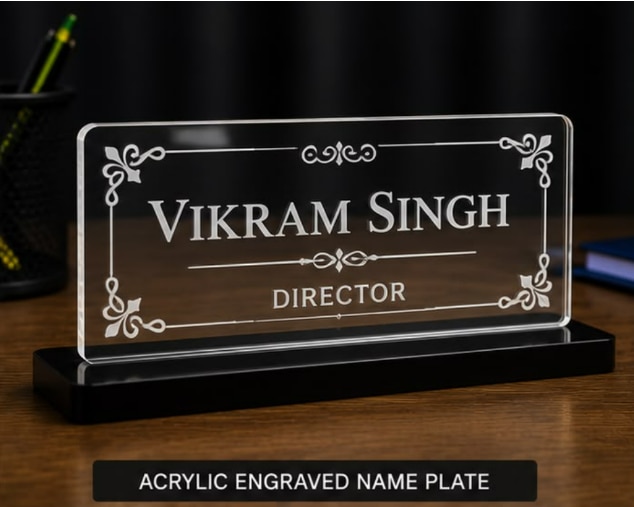 | Laser Engraved Acrylic Laser Job Services is a manufacturer of precision laser-cut and engraved acrylic products, offering customised Acrylic Engraved Name Plates for... View product → |
Keywords