

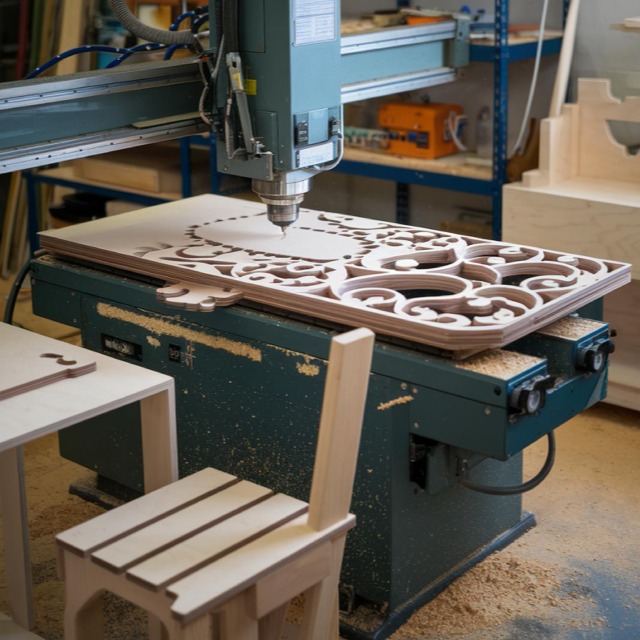
Modern custom furniture manufacturing increasingly relies on digitally machined components to achieve precise profiles, specialized joinery grooves, pocketing recesses, and non-standard geometric shapes. Selecting a CNC routing provider in Ghaziabad requires evaluating how well a workshop can interpret technical drawings and maintain consistency across production runs.
1. Define Detailed Component Specifications
To get an accurate production estimate, avoid vague service requests. Prepare a detailed project brief that clearly communicates:
- Material type, grade, and exact thickness
- Final component dimensions and total quantity
- Specific cutting profiles, internal cut-outs, or drilling patterns
- Required depths for grooves, channels, or pocketing recesses
- Intended assembly relationships between individual parts
2. Confirm Material and Machine Compatibility
CNC routers use different tooling bits, spindle speeds, and vacuum hold-downs depending on the sheet material being processed. Ensure the service provider has experience working with your chosen material whether it is MDF, solid wood, plywood, acrylic, or specialized plastics to guarantee clean edges and accurate depths.
3. Account for Tooling Diameter Limitations
Unlike a laser beam, a CNC router cuts using a physical rotating bit that has a specific diameter. This means perfectly sharp internal corners seen on a digital drawing cannot be reproduced exactly, as the tool will naturally leave a radius. A knowledgeable service provider will review your file to ensure internal corners and narrow channels are optimized for standard routing tools.
4. Specify Precise Depth Tolerances for Joinery
Furniture components frequently require controlled-depth routing for grooves, rebates, and hardware recesses that do not go completely through the panel. These dimensions must be explicitly detailed in the production drawings to ensure that intersecting panels and hardware fit tightly during final assembly.
5. Evaluate Material Optimization and Nesting Options
Efficient sheet utilization directly affects project costs, especially for high-volume furniture production. Ask if the provider utilizes digital nesting software to arrange parts optimally across sheet dimensions to minimize material waste while respecting wood grain orientation or structural requirements.
6. Run a Prototype for Assembly-Critical Parts
If your furniture design involves interlocking components, dowel holes, or slot-in joints, it is highly advisable to request a physical prototype first. A test assembly reveals whether clearances and tolerances work as intended, allowing for easy drawing adjustments before machining the full batch.
7. Clarify Post-Routing Processes and Vendor Scope
CNC machining is typically one step within a multi-stage furniture workflow. Parts often require edge-banding, sanding, painting, polishing, or hardware installation. Confirm exactly which finishing operations are covered by the router service and which remain your responsibility.
Laser Job Services handles professional CNC routing and digital fabrication for custom furniture and interior projects in Ghaziabad. Partnering with a service that understands material characteristics, tooling parameters, and assembly requirements leads to a seamless production workflow.
Contact Laser Job Services to discuss your custom furniture fabrication needs.