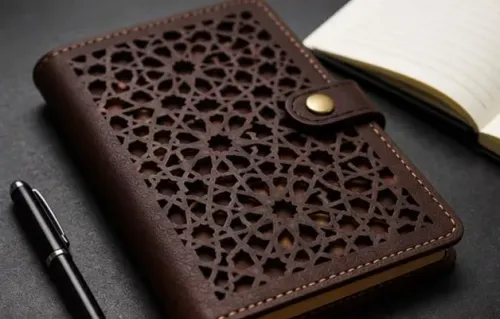
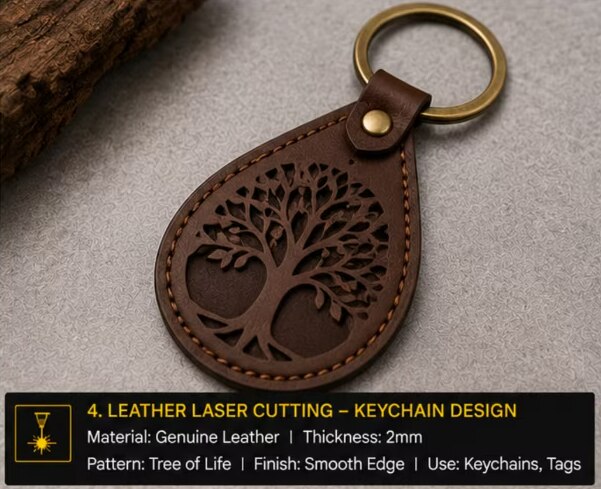
A leather keychain is not automatically the best choice because it looks premium. Your decision depends on the leather construction, attachment method, artwork size, expected exposure to moisture and abrasion, and whether the supplier can prove the finished sample will survive daily use.
Key takeaways
- Choose leather when softness, low weight and a premium feel matter.
- Reject hides with loose fibres, deep scars, weak edges or inconsistent thickness.
- Use a reinforced hole and rounded corners to reduce splitting and wear.
- Approve a physical sample before ordering personalised leather keychains in quantity.
Is leather the right keychain material for your use?
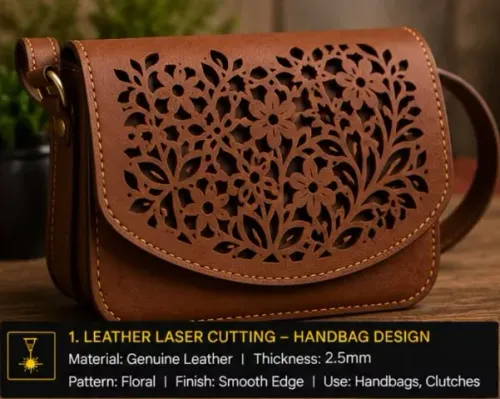
Leather is the best balance for a keychain you carry daily and want to feel soft, light and premium. It absorbs some impact instead of clacking against keys, while laser-cut outlines and engraved details create a cleaner, more repeatable finish than hand-cut leather.
It is not the toughest choice: sweat, rain, abrasion and heat can darken, stiffen or distort it.
| Option | Appearance and comfort | Durability in daily use |
|---|---|---|
| Leather | Warm, flexible and premium; comfortable in a pocket | Resists ordinary flexing, but moisture, sweat and edge abrasion age it |
| Wood | Natural and decorative; light but rigid | Can split at the hole, swell with water or chip at thin sections |
| Acrylic | Bright colours and sharp graphic detail; hard-edged feel | Resists moisture but can scratch or crack around a small hole |
| Metal | Formal, slim and highly resistant to abrasion | Long-lasting, but heavier, noisier and less comfortable in a pocket |
| Traditionally cut leather | Soft and handcrafted; visible variation adds character | Strong when stitched or riveted, but edges and repeated shapes vary more |
If you want a personalised tag for keys, luggage or a company giveaway, buy laser cut leather for keychain in noida only after confirming the material is genuine leather or a laser-safe construction. Unknown PU or PVC-coated leather is a poor choice: chlorine-containing plastics can release corrosive hydrogen chloride fumes and damage equipment.
Also check the attachment. A split ring loads one small hole repeatedly, so thin, soft leather can tear even when the decorative shape looks excellent. Choose stitched, riveted or folded-loop construction when the keychain will face heavy pulling, rain or daily work use.
How do you check leather before approving a laser-cut order?
Approve the order only after seeing a physical sample from the same hide or roll as production. Leather varies in thickness, oil content, grain direction, coating and tanning chemistry, so settings that cut one batch cleanly can scorch or fail to cut another.
1. Ask for the material construction in writing. Genuine leather is a hide with a natural grain; bonded leather contains leather fibres held together with a binder; PU leather is a synthetic polyurethane-coated fabric or sheet. Request the fibre composition and technical data sheet, not just the word “leather.”
2. Reject any material containing PVC or another chlorine-containing plastic unless the processor confirms it is safe for the specific laser system. PVC can release corrosive hydrogen chloride, damage optics and exhaust parts, and create hazardous fumes. Do not identify PVC by burning a sample.
3. Measure the actual thickness at several points and record the range. Thickness affects cut-through power, edge scorching and hole accuracy; a thick or uneven sheet can leave incomplete cuts.
4. Bend and handle the sample. A stiff sheet holds a sharp outline but can crack around a hole, while a soft, oily sheet flexes comfortably but may deform or produce smoky edges.
5. Inspect the grain, pores, scars, wrinkles and surface coating. Heavy paint, wax or plastic coating changes engraving contrast and smoke residue, while natural marks prevent identical-looking pieces.
6. Require a finished test showing both faces. Check for dark, brittle edges, soot on the underside, excessive burnt odour and clean separation before approving production.
Which dimensions and design details prevent early failure?
Specify the finished size, not only the artwork size. A practical leather keychain design in Noida needs the outline, leather thickness, corner radius, hole diameter, hole-to-edge distance and hardware geometry fixed before cutting.
| Feature | Engraved artwork | Cut-through artwork |
|---|---|---|
| Artwork detail | Keep lettering bold and readable at finished size | Avoid narrow bridges and isolated centres |
| Border | Leave at least 3 mm around the engraving | Leave at least 4 mm of leather around openings |
| Text placement | Keep text away from the bend near the hole | Keep cut letters away from the outer edge |
| Failure risk | Fine marks can disappear into smoke staining | Thin sections can tear during flexing |
Use this specification checklist:
- Choose a rounded outline with a corner radius of at least 2 mm; sharp corners catch on clothing and split sooner.
- State the leather thickness, such as 2 to 3 mm, and approve a proof cut from the same hide or roll.
- Match the hole to the hardware: a 4 mm hole will not accept every split ring, and a hole too close to the edge will elongate under repeated bending. Keep at least 4 mm of leather between the hole and the nearest edge.
- Place names and logos on the stable centre area, then approve them at actual finished size. Supply the outer cut as vector outlines and engraving as a separate layer; convert text to outlines and confirm spelling, orientation and mirroring.
- Record split-ring wire diameter, clasp width and attachment direction. Reserve grain direction and a clean border during nesting, even if that increases material use.
A retained sample should record the approved dimensions, edge colour, hardware and artwork revision so a repeat order does not quietly change.
What personalisation and laser finish should you approve?
Approve the finish from a physical proof at the actual finished size, made from the same hide or roll intended for production. A clean front face does not guarantee a clean back: smoke can leave heavier soot underneath, and a personalized leather keychain in Noida may look acceptable until its reverse side rubs against clothing.
1. Submit the external cut as vector outlines and the engraving as a separate layer. Provide names and initials as outlined text or include the exact font file; send logos and icons as clean vector artwork. For a QR code, supply the final URL and approve a full-size scan test.
2. Check spelling, reading direction, logo proportions and any mirrored artwork before approval. Inspect small lettering at finished size, not on a large screen preview; laser kerf and smoke staining can merge thin strokes.
3. Ask for both faces of the sample. Reject loose soot, sticky residue, severe brown-to-black scorching, cracked edges or a burnt-organic odour that remains after wiping and airing. Some darkening on a cut edge is normal; excessive scorching signals unsuitable settings or material.
4. Compare engraving contrast under ordinary indoor light. The mark must remain legible without relying on deep burning that weakens the leather. Ask Laser Job Services to produce the sample from the production hide, then bend it and rub the engraved face with a clean cloth.
Approve a custom leather keychain maker in Noida only after the proof confirms the artwork, finish, smell and reverse-side cleanliness you will accept in every delivered piece.
Related products
 | Leather Laser Cutting Leather Laser Cutting – Keychain Design | Premium Laser Job Services Showcase creativity and craftsmanship with our Leather Laser Cutting Services for custom keychains, leather tags, and... View product → |
 | Leather Laser Cutting Leather Laser Cutting – Keychain & Tag Design | Precision Laser Job Services Enhance your brand with premium Leather Laser Cutting Services for custom keychains, luggage tags, promotional tags,... View product → |
How should you compare suppliers, quotes and production samples?
Choose the supplier whose delivered sample matches the quoted production process, not the one offering the lowest cutting price. A production-ready laser cut leather tag in noida includes soot removal, edge wiping, tape removal, hole cleaning, hardware assembly, inspection and packing; confirm each item is included.
| Supplier or quote | What to compare | Warning sign |
|---|---|---|
| Cutting-only quote | Cutting, nesting, material yield and scrap allowance | Hardware and finishing are charged later |
| Production sample | Same hide or roll, thickness, finish and hardware as the batch | Sample uses cleaner leather than production |
| Finished sample | Edge colour, odour, residue, hole fit and assembly | Split ring rubs the hole or the edge leaves soot |
Ask how nesting follows grain direction and how natural scars, pores, wrinkles and colour variation are accepted. Record an allowed variation range rather than demanding identical pieces from different hide areas.
Flex, abrade and expose the sample to sweat, moisture and repeated key contact. Reject it if the hole elongates, the hardware twists out, engraving fades or the edge transfers colour.
- Leather type, nominal thickness, finish and acceptable edge colour
- Finished dimensions, hole diameter, hole-to-edge distance, corner radius and hardware geometry
- Artwork revision, laser process, post-processing and packing method
- Batch inspection method, colour tolerance and replacement rules
For a personalized leather keychain in Noida, approve spelling, orientation and hardware fit in writing before production. The final specification must name every measurable feature, not merely say “same as sample.”
Frequently asked questions
Is leather the right material for a daily-use keychain?
Leather suits daily carry when you want a soft, lightweight keychain that absorbs impact and feels more premium than rigid acrylic or metal.
How do you check leather before approving a laser-cut order?
Inspect thickness consistency, surface scars, loose fibres, edge quality and the area around the attachment hole. Request a physical sample before production.
Which dimensions help prevent a leather keychain from failing early?
Use rounded corners, enough material around the hole and a shape that does not bend sharply under the weight of the keys. Confirm the dimensions on a sample.
What laser finish should you approve for a personalised leather keychain?
Approve an engraving with readable contrast, clean edges and no excessive scorching. Check the final name, logo or artwork at actual production size.
How should you compare leather keychain suppliers in Noida?
Compare leather samples, dimensions, hole reinforcement, engraving quality, sample approval, quantity, packaging, lead time and the full quote rather than price alone.
Related product
 | Leather Laser Cutting Leather Laser Cutting Key Fob Cover Precision Laser Job Services Premium Leather Laser Cutting for Car Key Covers Protect your car keys in style with our Leather Laser Cutting Job... View product → |
Keywords