

Decorative jali panels can transform walls, partitions, ceilings, furniture, and feature areas, but attractive digital artwork does not automatically result in a successful physical installation. For interior professionals and contractors working on projects in Ghaziabad and Noida, avoiding a few common manufacturing and design mistakes can prevent unnecessary fabrication or installation difficulties.
1. Choosing a Pattern That Is Too Delicate
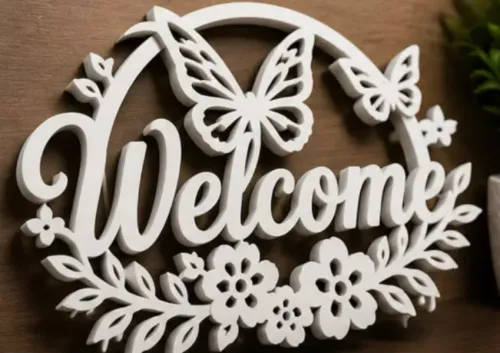
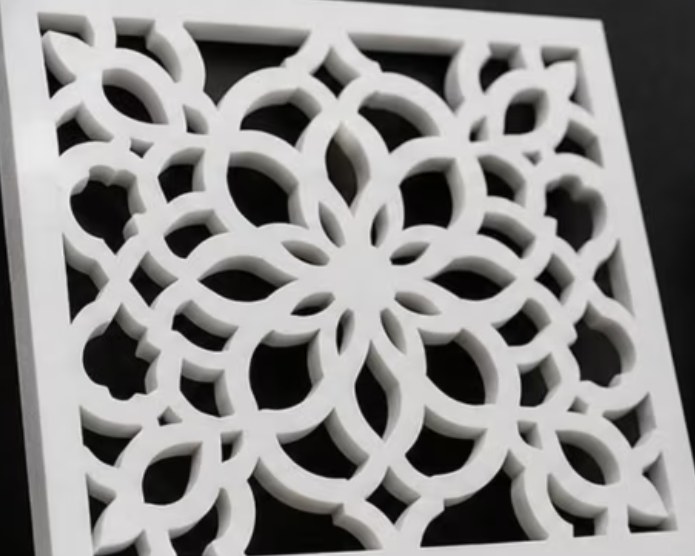
Highly intricate designs look impressive on screen, but very thin connecting sections can become fragile after material is removed. An MDF jali pattern needs enough remaining material to maintain its structural integrity during handling, finishing, transportation, and installation. Before production, review whether the design contains extremely narrow bridges or unsupported sections relative to the overall size of the panel.
2. Ignoring Final Panel Dimensions and Proportions
A pattern designed for a small sample may not work equally well when scaled up to a full-sized wall panel. Similarly, shrinking a large pattern can make openings too small and connecting sections too narrow for clean machine paths. Jali artwork should always be evaluated and balanced at the actual production dimensions.
3. Selecting Material Thickness Only by Price
Using a thinner board may initially appear economical, but thickness directly affects rigidity and handling. The correct thickness specification should be determined based on panel size, pattern density, support structure, and whether the panel will be used as a standalone partition or a framed insert.
4. Forgetting About Frames and Mounting Requirements
A jali panel does not exist independently from its installation environment. Designers need to plan early whether the panel will be fixed inside a frame, mounted directly to a wall, suspended from a ceiling, or integrated into furniture. Mounting methods affect external dimensions, edge allowances, and pattern placement.
5. Not Planning the Finishing Process Early
MDF jali panels are frequently painted, polished, or laminated after cutting. If finishing requirements are considered too late, reaching the inner edges of numerous small openings can become highly difficult. The production and cutting plan should always account for the desired final finishing method.
6. Using Unprepared Digital Files
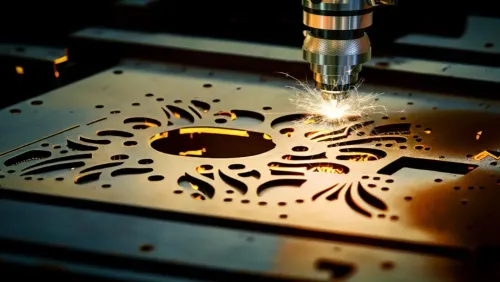
A visually correct image file is not necessarily a production-ready file. Common issues like duplicate lines, disconnected paths, overlapping geometry, and incorrect scaling can affect machine paths and increase production time. Clean vector artwork with confirmed dimensions is essential for custom fabrication.
7. Failing to Check Pattern Continuity Across Multiple Panels
Large installations often use several panels placed side by side to form a continuous pattern. If individual panels are cut without considering pattern alignment and continuity at the joints, the final installation will show visible breaks. Mapping and numbering the panels before cutting ensures visual continuity.
8. Ordering Full Quantity Without Testing a Sample
For new or highly complex patterns, producing a single sample test piece can reveal practical issues with material strength, visual openness, and edge conditions that are difficult to judge digitally on a screen. Testing helps optimize the layout before committing to a full production run.
Laser Job Services works with customized digital patterns for interior and related fabrication applications in Ghaziabad. Coordinating design, material selection, cutting, and installation from the beginning ensures a successful project outcome.
Contact Laser Job Services to discuss your custom MDF jali fabrication requirements.